Image 1 of 1
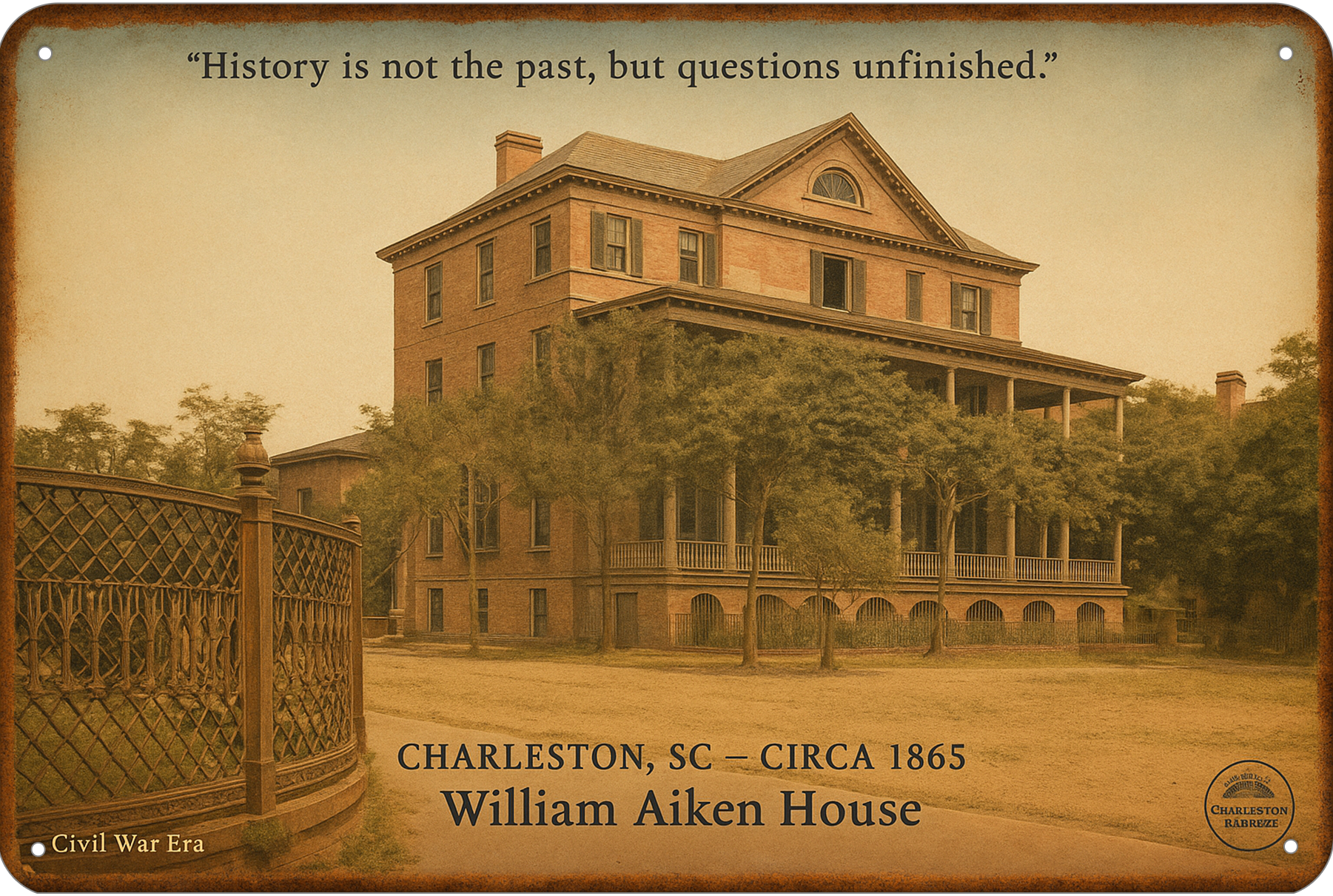
Made with high quality Tin sign , size 8×12 in. with 4 predrilled small holes on the corns
Location: 456 King Street, Charleston, SC
Built: 1807
Style: Federal, later updated with Greek Revival and Victorian influences.
William Aiken Sr. (1779–1831): A wealthy merchant and founder of the South Carolina Canal and Railroad Company, one of the earliest railroads in America. He purchased the property and built the house.
William Aiken Jr. (1806–1887): His son, who later became the 61st Governor of South Carolina (1844–1846), expanded and lived in the home.
19th Century: Social center for Charleston’s elite, reflecting the city’s prosperity during the cotton boom.
Civil War Era: Like much of Charleston, the house and grounds were impacted, though the core structure survived.
20th Century: Transitioned from a private residence to institutional use (including by the Charleston Museum).
Today: Operated as a luxury wedding and events venue, with restored interiors, grand ballrooms, and formal gardens.
Listed as a National Historic Landmark.
Represents Charleston’s railroad history, political heritage, and elite antebellum lifestyle.
Its gardens and piazzas make it one of the most photographed wedding venues in the city.
Made with high quality Tin sign , size 8×12 in. with 4 predrilled small holes on the corns
Location: 456 King Street, Charleston, SC
Built: 1807
Style: Federal, later updated with Greek Revival and Victorian influences.
William Aiken Sr. (1779–1831): A wealthy merchant and founder of the South Carolina Canal and Railroad Company, one of the earliest railroads in America. He purchased the property and built the house.
William Aiken Jr. (1806–1887): His son, who later became the 61st Governor of South Carolina (1844–1846), expanded and lived in the home.
19th Century: Social center for Charleston’s elite, reflecting the city’s prosperity during the cotton boom.
Civil War Era: Like much of Charleston, the house and grounds were impacted, though the core structure survived.
20th Century: Transitioned from a private residence to institutional use (including by the Charleston Museum).
Today: Operated as a luxury wedding and events venue, with restored interiors, grand ballrooms, and formal gardens.
Listed as a National Historic Landmark.
Represents Charleston’s railroad history, political heritage, and elite antebellum lifestyle.
Its gardens and piazzas make it one of the most photographed wedding venues in the city.