 Image 1 of 2
 Image 2 of 2
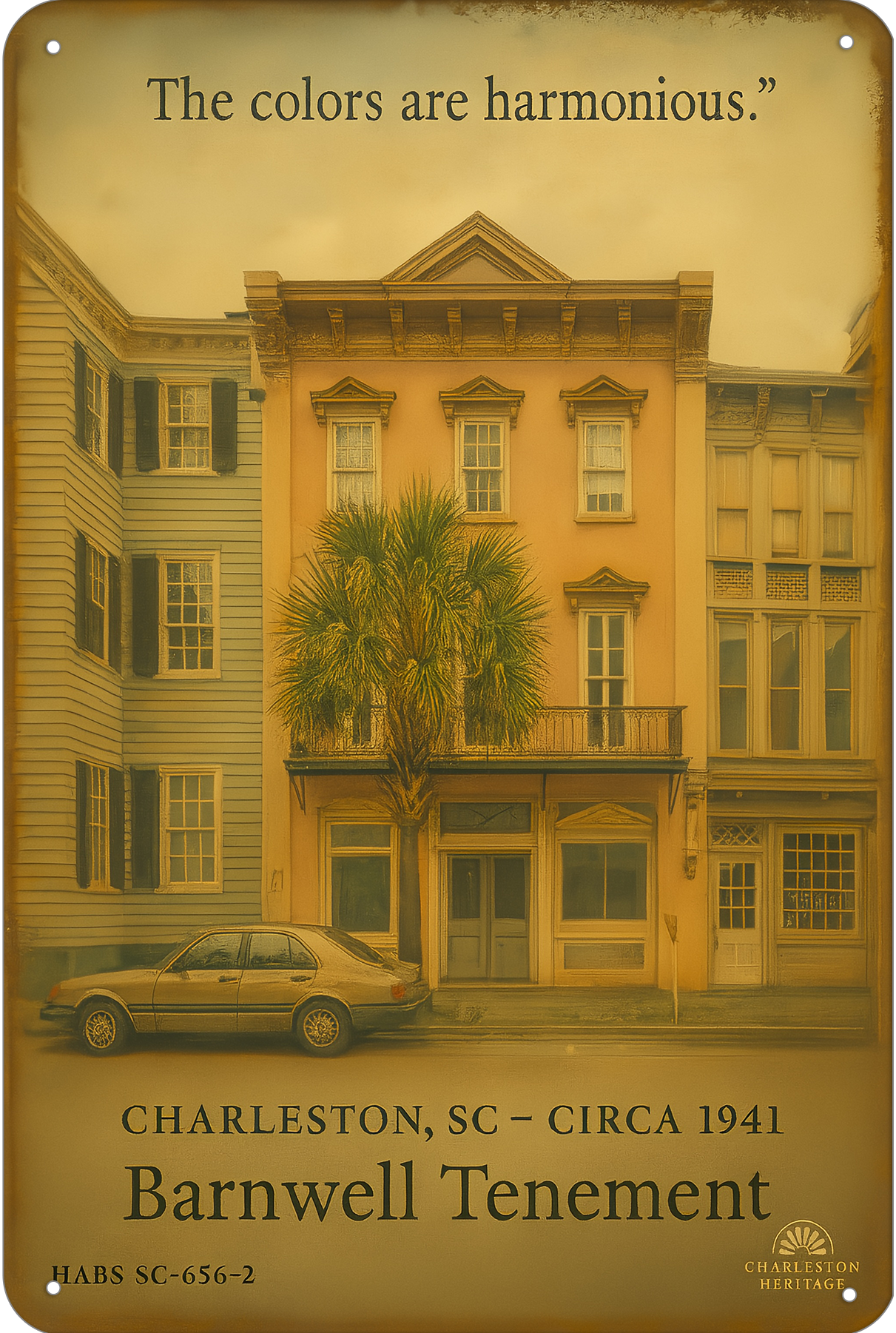
Made with high quality Tin sign , size 8×12 in. with 4 predrilled small holes on the corns
Location: 49–51 Broad Street, Charleston, SC (South of Broad, in the historic core).
Built: Around 1740 for the Barnwell family, one of the influential planter and political families of early South Carolina.
Architecture:
A Georgian-style double tenement (two attached residences under one roof).
Three-and-a-half stories in brick, with symmetrical façades and dormer windows.
Thick masonry walls typical of pre-Revolution Charleston.
Tenement meaning: In the 18th century, “tenement” simply meant a dwelling (not a slum). The Barnwell Tenement was a high-status urban townhouse.
Barnwell family: Descendants of John Barnwell (“Tuscarora Jack”), a colonial military leader, were prominent planters and politicians.
Survival: It is considered one of the oldest brick houses still standing in Charleston.
Later history: Used as both residences and commercial space over the centuries, reflecting Broad Street’s role as a blend of residential and mercantile activity.
Privately owned but recognized as part of the Charleston Historic District (National Historic Landmark).
Often noted on walking tours for its early colonial brickwork and connection to the Barnwell family.
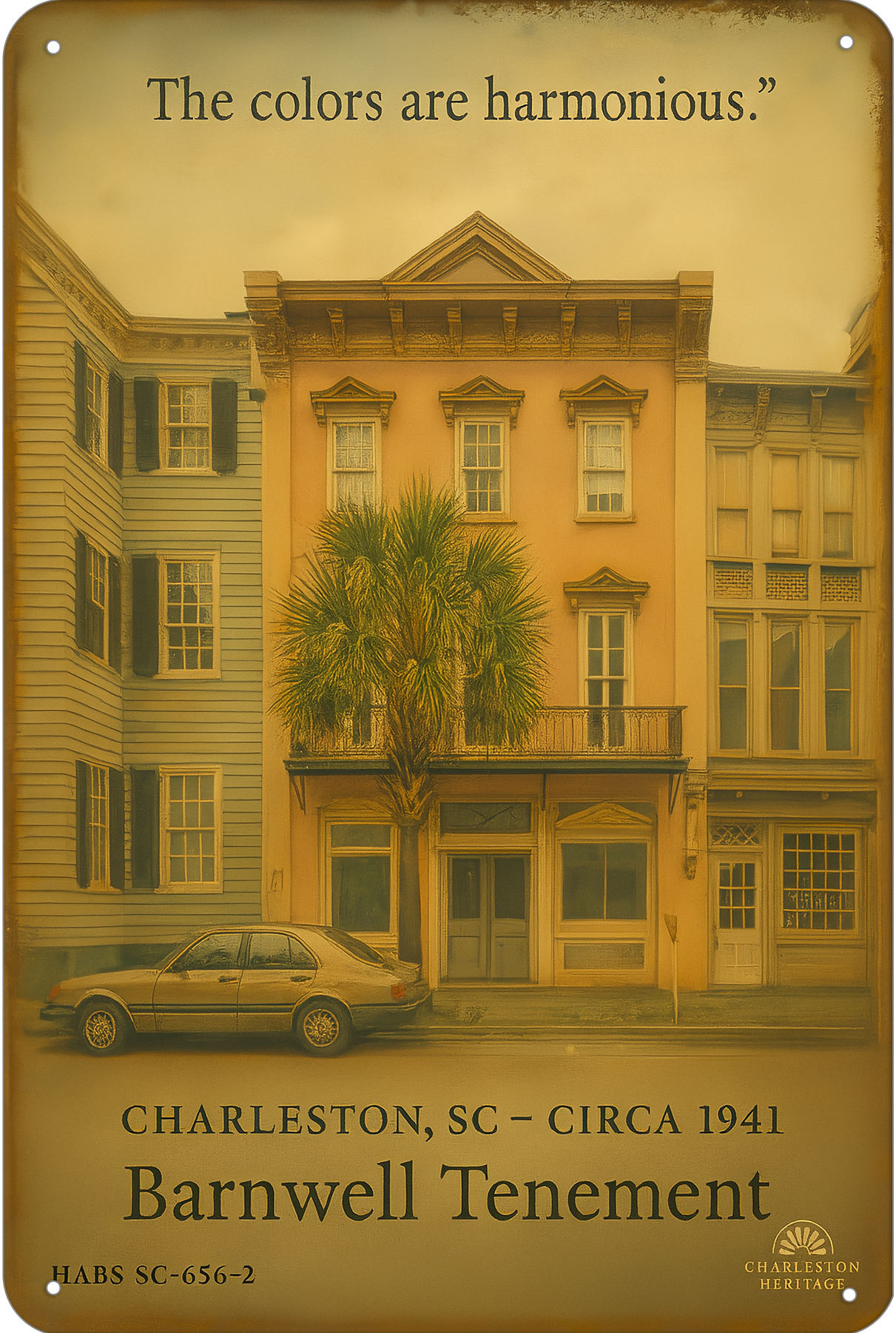
Made with high quality Tin sign , size 8×12 in. with 4 predrilled small holes on the corns
Location: 49–51 Broad Street, Charleston, SC (South of Broad, in the historic core).
Built: Around 1740 for the Barnwell family, one of the influential planter and political families of early South Carolina.
Architecture:
A Georgian-style double tenement (two attached residences under one roof).
Three-and-a-half stories in brick, with symmetrical façades and dormer windows.
Thick masonry walls typical of pre-Revolution Charleston.
Tenement meaning: In the 18th century, “tenement” simply meant a dwelling (not a slum). The Barnwell Tenement was a high-status urban townhouse.
Barnwell family: Descendants of John Barnwell (“Tuscarora Jack”), a colonial military leader, were prominent planters and politicians.
Survival: It is considered one of the oldest brick houses still standing in Charleston.
Later history: Used as both residences and commercial space over the centuries, reflecting Broad Street’s role as a blend of residential and mercantile activity.
Privately owned but recognized as part of the Charleston Historic District (National Historic Landmark).
Often noted on walking tours for its early colonial brickwork and connection to the Barnwell family.